
The Saree
The Grammar of the Pallu
One length of fabric, a hundred ways to fold it. How the pallu changes meaning with every drape.
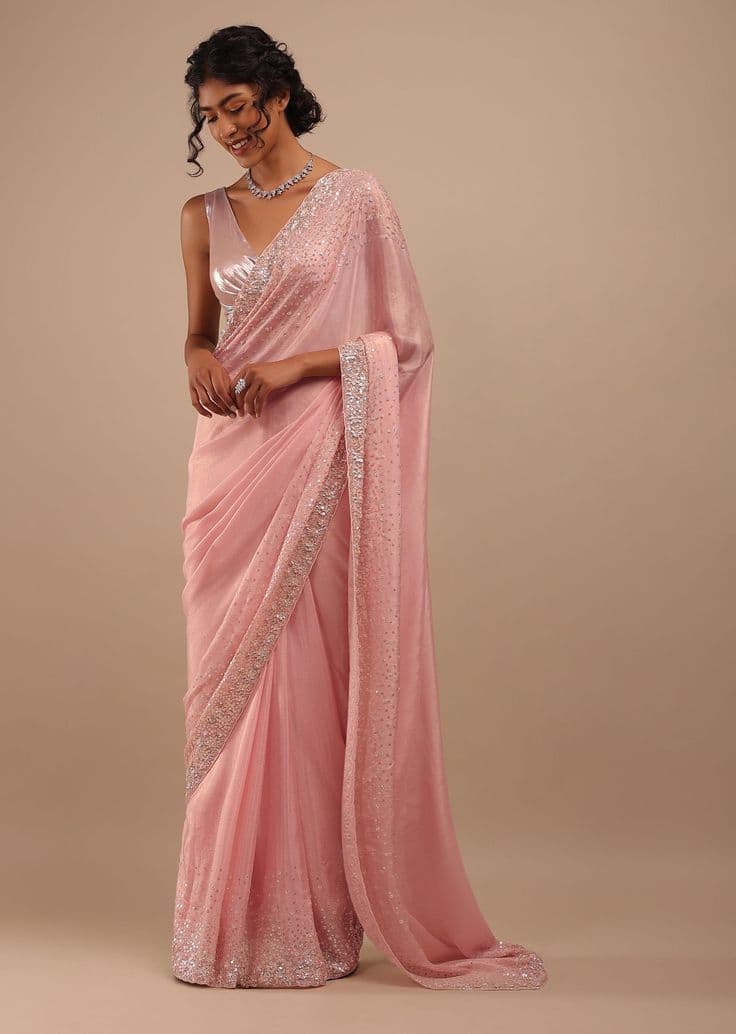
The pallu is the part of the saree that does the most talking — draped over one shoulder, pinned across the chest, or let loose to trail behind. It is also the part every draping style treats differently, which is why the same saree can look entirely different depending on how its final length is handled.
Three Drapes, Three Moods
A pallu pleated and pinned close to the shoulder reads as tailored and contained — the choice for a saree with a dense pallu block, like The Vermilion Weave's kalamkari panel, where you want the artwork held flat and visible. Let the same length fall loose and unpinned, and the mood shifts toward movement — better suited to a lighter fabric like The Willow Mist's linen blend, where the hand-painted florals are meant to catch the light as you walk.
A one-shoulder drape, pallu swept back rather than forward, is the most contemporary of the three — a styling choice that works especially well with a printed or patterned pallu, letting the pattern read as a single continuous sweep rather than a folded block.
However you fold it, the pallu is the last word in the sentence.
There's no single correct way to drape a pallu — only the way that suits the fabric, the occasion and the hour. Try more than one before deciding which is yours.