
Craft
Reading a Saree by Its Border
Kalamkari paisleys, hand-painted vines, zari geometry, appliquéd folk art — the border is where a saree tells you what it is.
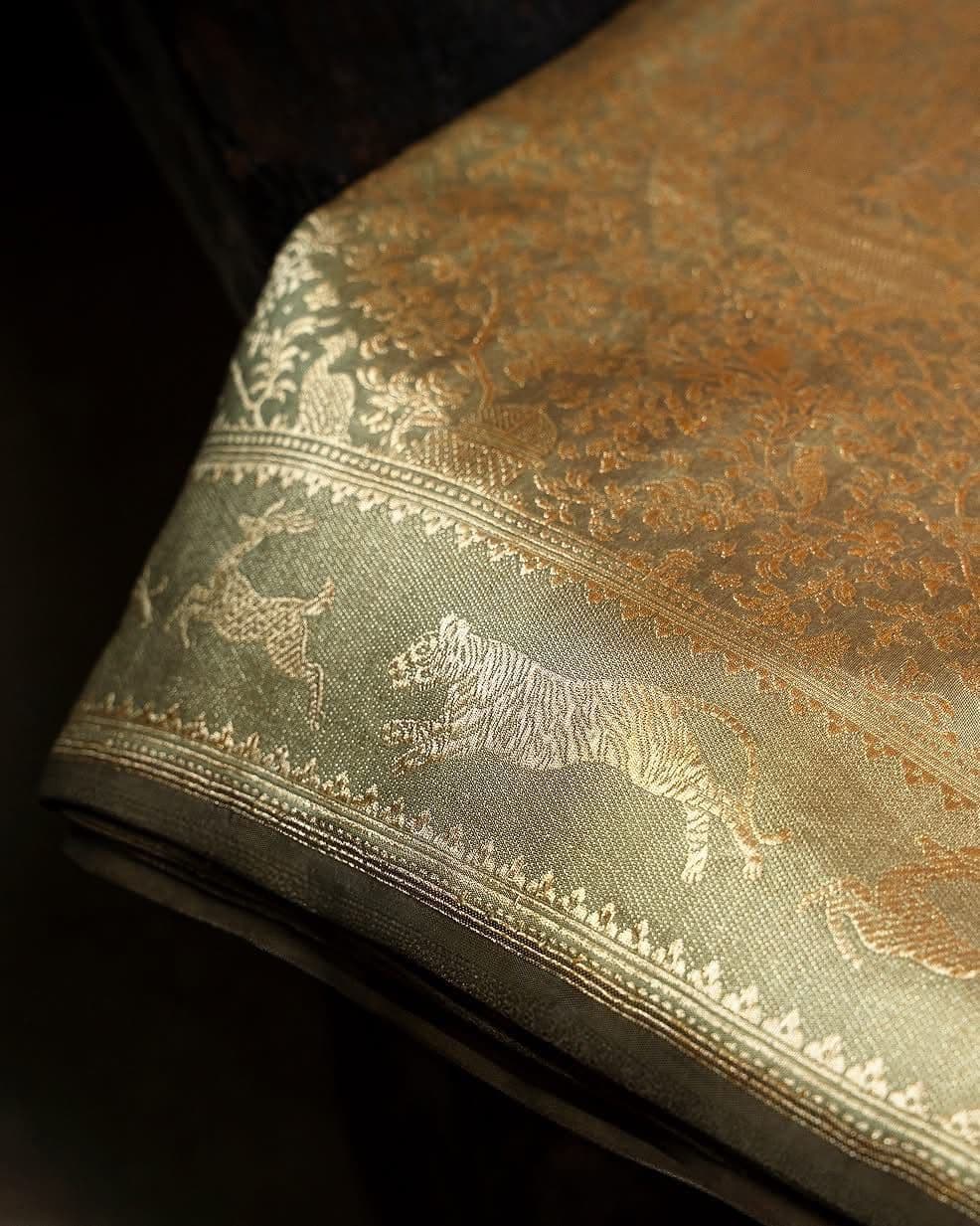
Before you read a saree's colour, its fabric or its drape, read its border. Long before ready-to-wear had labels, the border was the label — a coded record of region, technique and occasion, woven or printed into the last few inches of fabric where the eye naturally lands.
Four Techniques, One Language
Across this season's opening pieces, KIAAN HOUSE worked with four distinct border languages. The Vermilion Weave carries a hand block-printed kalamkari temple border in vermilion red — a zigzag motif with roots in Andhra Pradesh's pen-and-natural-dye tradition, paired with a dense paisley pallu block. The Willow Mist takes a gentler approach: florals painted by hand, vine by vine, along an ivory linen edge, no two leaves quite identical.
The Midnight Canopy and its festive siblings move into zari — metallic thread woven or stitched along the border for structure and shine, a technique closer to formalwear than daywear. And on the Rose Ember and Merlot Tale, the border gives way entirely to hand-appliquéd patch panels: kalamkari and Pichwai artwork, quite literally sewn onto the pallu as small, framed paintings.
The border is the only part of a saree that has to work at three distances — across a room, across a table, and up close, in the hand.
Learning to read a border is, in a small way, learning to read where a saree comes from and what it was made for. It's a habit worth keeping, on and off the shelf.